
Krishna Venugopal

Krishna Venugopal

Orissa

Brass alloy

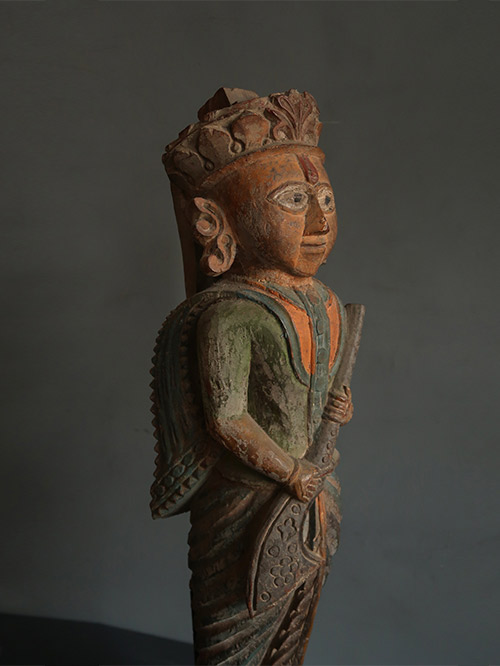
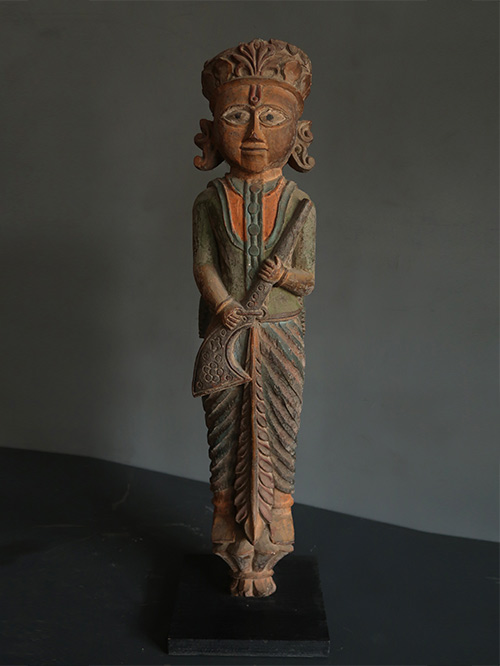
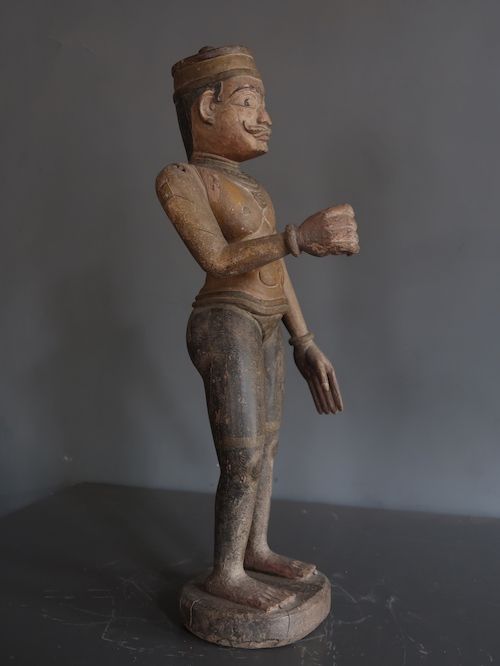
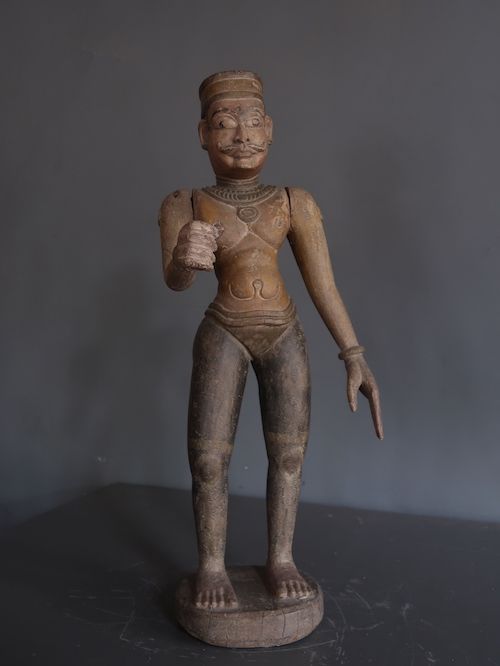
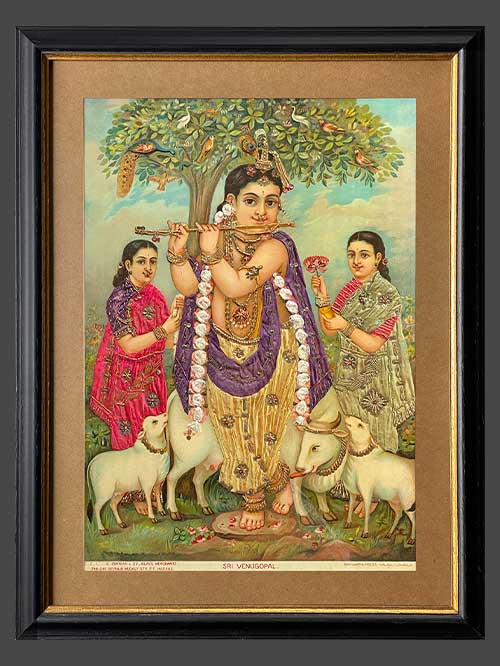
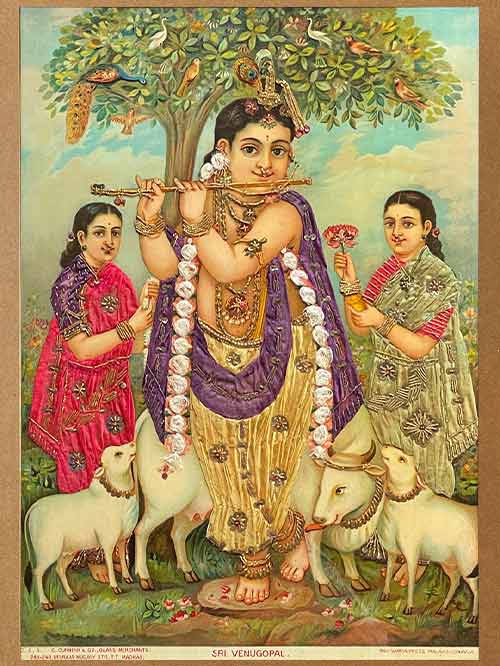
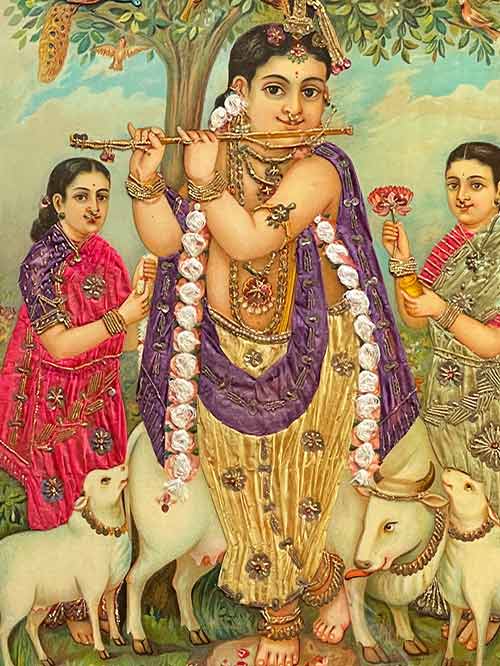
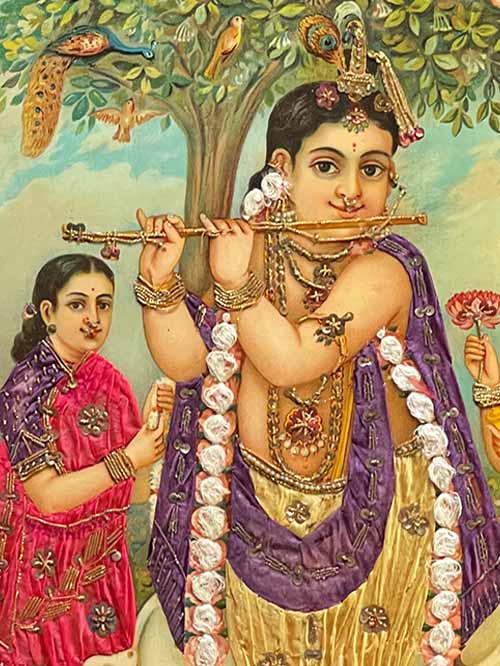
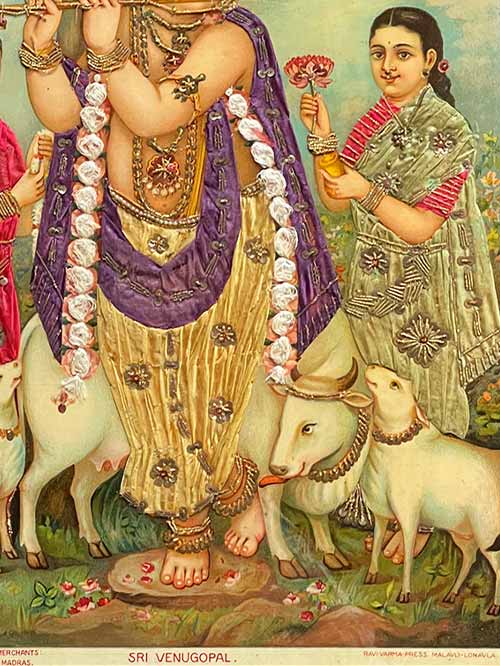
Krishna stands fluting on a circular grooved pedestal, dressed in a dhoti with a sash and adorned with simple jewellery—necklaces, bracelets, anklets, and earrings. His hair is tied in a vertical topknot that approximates a tall decorative mukuta (crown). One of the most enduring images in Indian art is that of Krishna the flautist, standing with his legs crossed at the ankles as he plays the flute. The depiction of Venugopala appears relatively late in Indian literature and art, emerging from the idea of the solitary shepherd who plays his bamboo flute (venu) while tending his cattle. Unlike the other cowherds of Braj, who carry shepherd’s staffs, Krishna’s staff is also his flute—played not to please the cows, but to enchant the gopis, the cowherd maidens.

Lord Krishna is one of the ten incarnations of Lord Vishnu and probably the most important. He has accumulated a great variety of myths with the result that, as well as being a human incarnation, Krishna shows all the aspects of human development usually associated with childhood, adolescence, adulthood, etc. There are few stages in a mortal worshippers life, or objects of his aspiration, for which a counterpart cannot be found somewhere in the stories relating the activities of Krishna. It is this almost universal appeal that is responsible for his wide popularity and the deep impression he has made on Indian life. Although many stories about Krishna concerned his superhuman deeds he also revealed a marked capacity for drinking, fighting and amorous escapades. Most of these are found in the Mahabharata, especially in its later interpolation the Bhagavad-Gita which is almost entirely devoted to him, and the Bhagavata-Purana.

Size (cms): 18.5(H) x 6.5(W) x 6.5(D)
Size (inches): 7.5(H) x 2.5(W) x 2.5(D)

SKU: PA 00363 Categories: , Tag:

Description

Orissa

Brass alloy

Krishna stands fluting on a circular grooved pedestal, dressed in a dhoti with a sash and adorned with simple jewellery—necklaces, bracelets, anklets, and earrings. His hair is tied in a vertical topknot that approximates a tall decorative mukuta (crown). One of the most enduring images in Indian art is that of Krishna the flautist, standing with his legs crossed at the ankles as he plays the flute. The depiction of Venugopala appears relatively late in Indian literature and art, emerging from the idea of the solitary shepherd who plays his bamboo flute (venu) while tending his cattle. Unlike the other cowherds of Braj, who carry shepherd’s staffs, Krishna’s staff is also his flute—played not to please the cows, but to enchant the gopis, the cowherd maidens.

Lord Krishna is one of the ten incarnations of Lord Vishnu and probably the most important. He has accumulated a great variety of myths with the result that, as well as being a human incarnation, Krishna shows all the aspects of human development usually associated with childhood, adolescence, adulthood, etc. There are few stages in a mortal worshippers life, or objects of his aspiration, for which a counterpart cannot be found somewhere in the stories relating the activities of Krishna. It is this almost universal appeal that is responsible for his wide popularity and the deep impression he has made on Indian life. Although many stories about Krishna concerned his superhuman deeds he also revealed a marked capacity for drinking, fighting and amorous escapades. Most of these are found in the Mahabharata, especially in its later interpolation the Bhagavad-Gita which is almost entirely devoted to him, and the Bhagavata-Purana.

Size (cms): 18.5(H) x 6.5(W) x 6.5(D)
Size (inches): 7.5(H) x 2.5(W) x 2.5(D)

Additional information

Material

Brass

Region

East India

Go to Top