
Tiger Vahana

Tiger Vahana

Karnataka

Wood, extensively polychromed

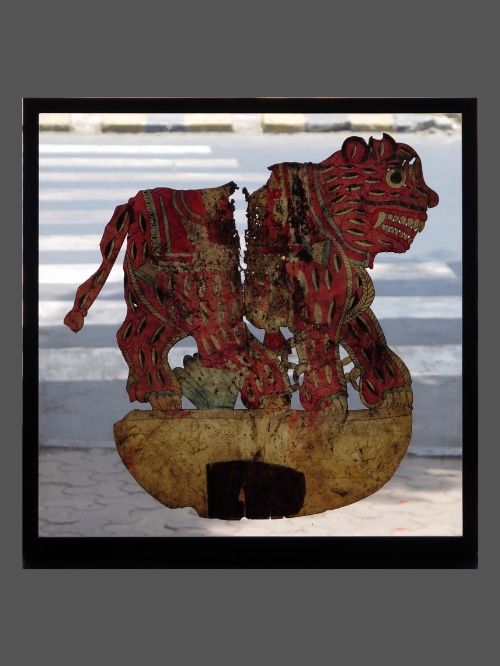
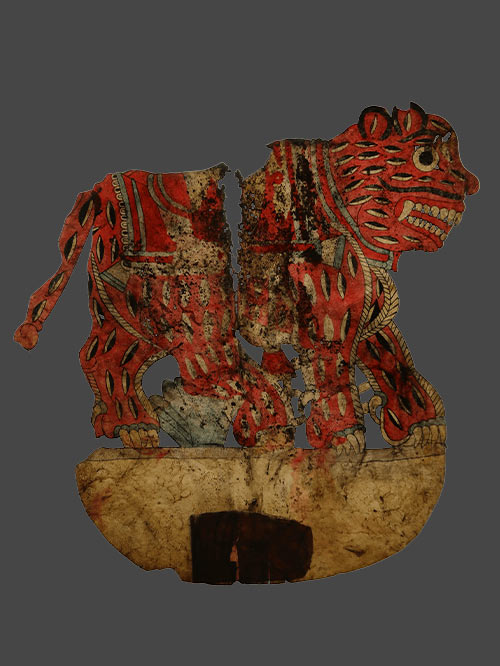
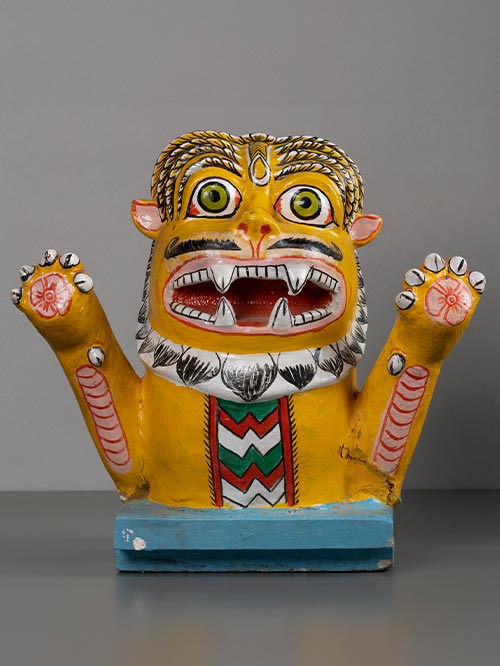
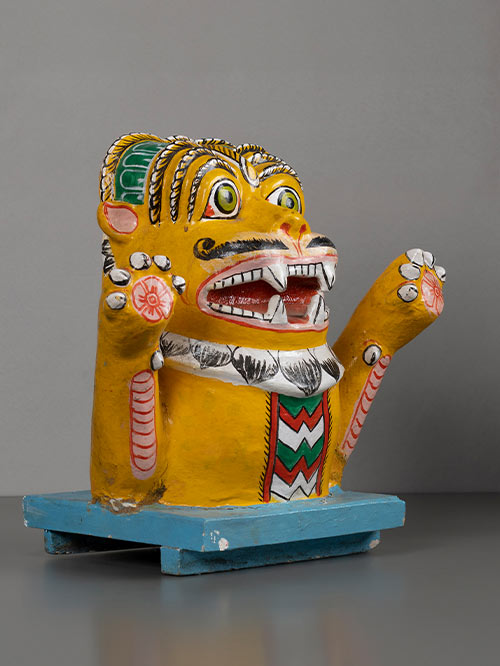
A charming tiger vahana with extensive original polychroming. The stylised tiger stands with an open mouth, displaying its large exposed teeth and a small protruding tongue, giving it a mischievous appearance. Red and green bubris (stripes) cover its muscular body, with red flowers painted across the chest. The tiger stands on a rectangular plinth. Such tigers were used as ritual displays in temples during important festivals such as Holi, Shivaratri, and Durga Puja

The tiger is the vehicle of, and sacred to, the Hindu goddess, Durga. From a certain perspective she is India’s Mother Nature, for she is the deification of Energy. Her consort, Shiva, sometimes evoked as Shambo, wears a tiger skin to indicate that he is beyond the bounds of the natural world.

Vahanas  are the vehicles or mounts of deities. Vahanas in their vedic context are conveyors of things human to the divine world. Each animal vahana, generally typical of only one deity, (In the present case it is the vahana for the goddess Durga.) and this is the most reliable clue to its identification and can be interpreted as an emanation of the deities’ personality. Their purpose was to carry the images of the deities – the utsava murtis or processional images- through the streets during temple festival processions. After the festival the vahanas are stored in the temple complex until the next temple festival. Within the Hindu tradition the vahanas remain on the margin between folk and classical art. However the vahanas themselves were never considered ‘art’ in the classical Hindu or the nineteenth century European sense. The imposing and beautiful and sometimes frightening wooden vahanas come alive as art and divinity only for a short time, to be enjoyed only for the moment. They are sacred art for the streets and it is in this context that the richness of their life as art and as icon should be seen.

Size (cms): 36(H) x 44(W) x 20(D)
Size (inches): 14(H) x 17.5(W) x 8(D)

SKU: PA 00997 Categories: , , Tags: ,

Description

Karnataka

Wood, extensively polychromed

A charming tiger vahana with extensive original polychroming. The stylised tiger stands with an open mouth, displaying its large exposed teeth and a small protruding tongue, giving it a mischievous appearance. Red and green bubris (stripes) cover its muscular body, with red flowers painted across the chest. The tiger stands on a rectangular plinth. Such tigers were used as ritual displays in temples during important festivals such as Holi, Shivaratri, and Durga Puja

The tiger is the vehicle of, and sacred to, the Hindu goddess, Durga. From a certain perspective she is India’s Mother Nature, for she is the deification of Energy. Her consort, Shiva, sometimes evoked as Shambo, wears a tiger skin to indicate that he is beyond the bounds of the natural world.

Vahanas  are the vehicles or mounts of deities. Vahanas in their vedic context are conveyors of things human to the divine world. Each animal vahana, generally typical of only one deity, (In the present case it is the vahana for the goddess Durga.) and this is the most reliable clue to its identification and can be interpreted as an emanation of the deities’ personality. Their purpose was to carry the images of the deities – the utsava murtis or processional images- through the streets during temple festival processions. After the festival the vahanas are stored in the temple complex until the next temple festival. Within the Hindu tradition the vahanas remain on the margin between folk and classical art. However the vahanas themselves were never considered ‘art’ in the classical Hindu or the nineteenth century European sense. The imposing and beautiful and sometimes frightening wooden vahanas come alive as art and divinity only for a short time, to be enjoyed only for the moment. They are sacred art for the streets and it is in this context that the richness of their life as art and as icon should be seen.

Size (cms): 36(H) x 44(W) x 20(D)
Size (inches): 14(H) x 17.5(W) x 8(D)

Additional information

Material

Wood

Region

South India

Go to Top