


Karnataka
Wood, extensively polychromed
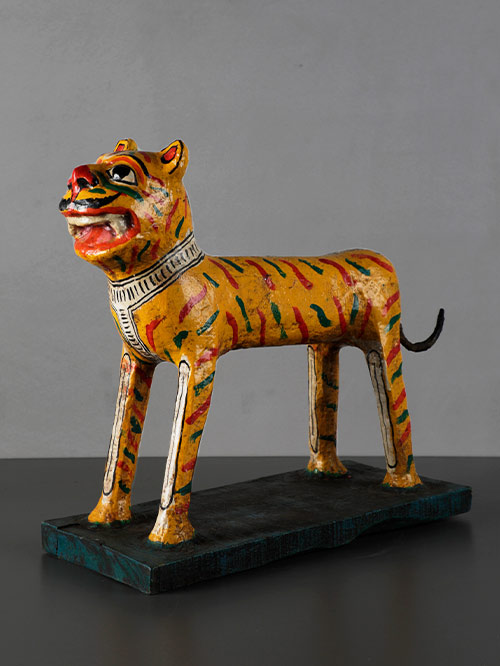
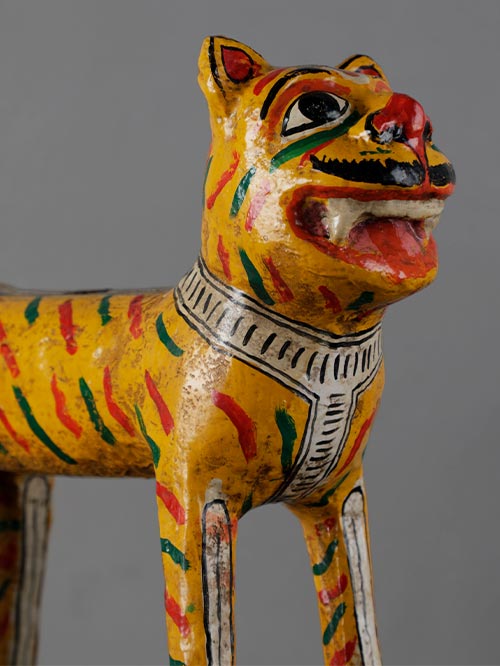
A charming tiger vahana with extensive original polychroming. The stylized tiger stands with an open mouth, displaying its large exposed teeth giving it a mischievous appearance. Its muscular body is painted with red and green bubris (stripes). The tiger stands on a rectangular plinth. Such tigers were used as ritual displays in temples during important festivals such as Holi, Shivaratri, and Durga Puja.
The tiger is the vehicle of, and sacred to, the Hindu goddess, Durga. From a certain perspective she is India’s Mother Nature, for she is the deification of Energy. Her consort, Shiva, sometimes evoked as Shambo, wears a tiger skin to indicate that he is beyond the bounds of the natural world.
Size (cms): 42.5(H) x 56(W) x 20.5(D)
Size (inches): 16.5(H) x 22(W) x 8(D)